The riddle of birthdays
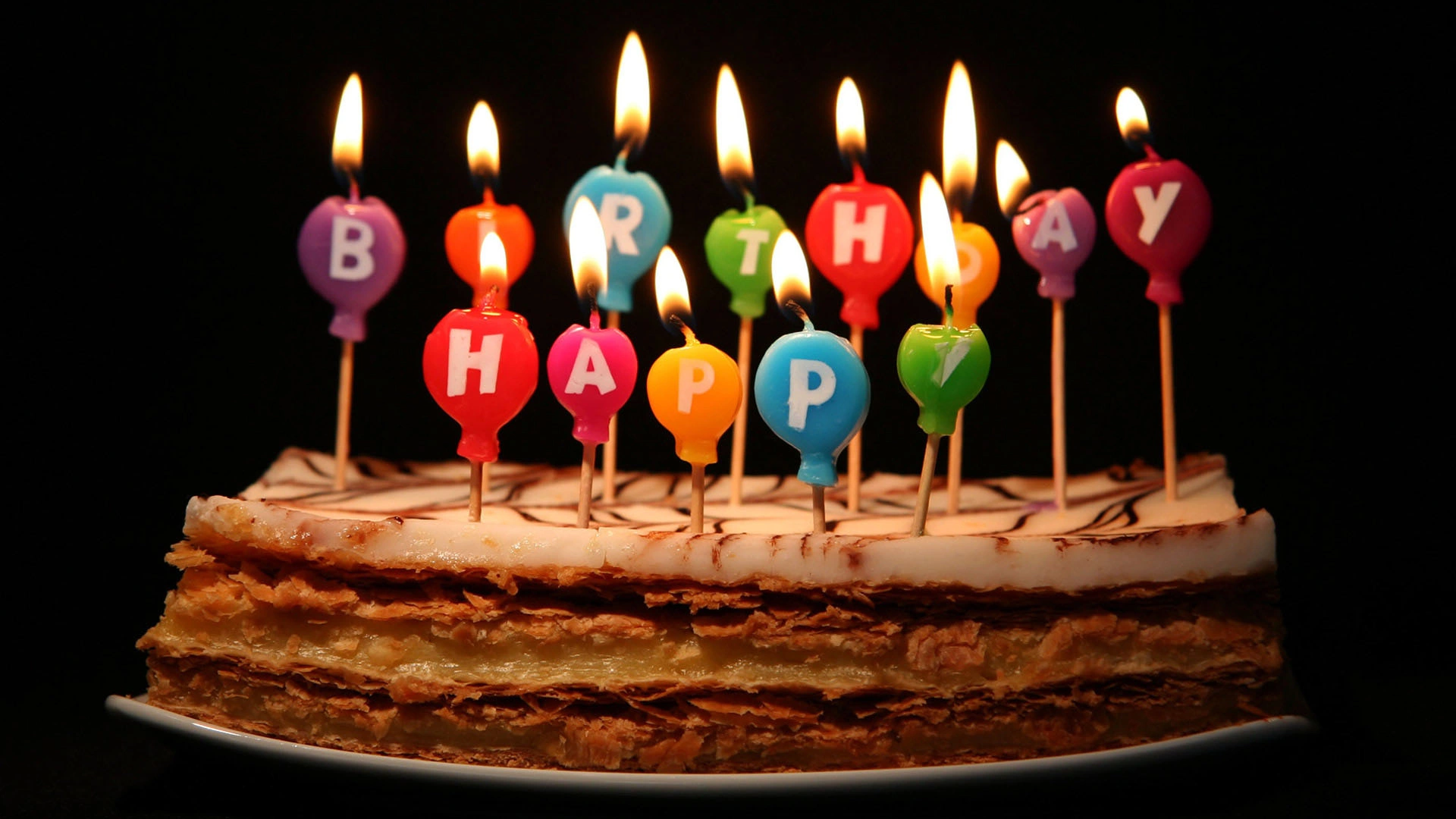

Probabilities can be hard to grasp. For instance, what are the chances that among a birthday party’s attendees two or more people will have their birthdays on the same day? Probably better than you might expect.
Since the day she was born, my mother’s birthday has been on 1 January. This year, she celebrated her twelfth jubilee year in a cosy party room filled with about fifty people.
Being the life and soul of any party, during my short talk I presented the guests with the fact that the probability of my mother’s date of birth being 1 January equalled \(\dfrac{1}{365}\). As most years consist of 365 days, I left leap years out of consideration. I also assumed a uniform distribution of birthdays across the calendar, as this simplifies the arithmetic.
Then I asked what the probability was for my father to be born on 8 July, given that there are 365 days to choose from. The answer was, again, 1 out of 365, or \(\dfrac{1}{365}\). In this respect, a particular date is no more special than any other, other than the cultural significance we attach to some.
Then I posed the crucial question: what is the probability that two or more people in this room share the same birthday? Irrespective of their year of birth; purely focusing on the day of the year.
In other words: with 365 days in a year and 50 people in the room, what are the chances that two or more birthdays coincide?

Sometimes people think of dice. If you roll two dice, the probability of rolling a six on the first die is \(\dfrac{1}{6}\), and on the second die it is also \(\dfrac{1}{6}\). The chance of throwing two sixes is \(\dfrac{1}{6} \times \dfrac{1}{6} = \dfrac{1}{36}\). Many people argue that the probability of two specific guests being born on 8 July, for instance, equals \(\dfrac{1}{365} \times \dfrac{1}{365} = \dfrac{1}{133{,}225}\). Intuition suggests that finding a shared birthday among fifty guests must be exceedingly rare.
Others imagine 50 marked marbles in an urn containing 365 marbles, concluding that the odds must be around \(\dfrac{50}{365}\).
Both intuitions are incorrect. In reality, the probability is 97%.
The calculation
In probability theory, it is often simpler to evaluate the complementary event: what is the probability that nobody shares a birthday?
We have 365 available days and 50 people. What is the probability that person 1 has their birthday on a day? Not a predefined date like 8 July, but simply any day of the year. That is 365 choices out of 365, or:
\[\dfrac{365}{365} = 1 \quad (100\%).\]
Now, what is the probability that person 2 has their birthday on a different day from person 1? Person 2 can celebrate on any day except the one already claimed, leaving 364 options:
\[\dfrac{364}{365} \approx 0.99726 \quad (99.7\%).\]
The joint probability that both people celebrate on different days is:
\[\dfrac{365}{365} \times \dfrac{364}{365} \approx 0.9973 \quad (99.7\%).\]
What happens when we introduce a third person? Person 3 must avoid the birth dates of persons 1 and 2, leaving 363 available days:
\[\dfrac{365}{365} \times \dfrac{364}{365} \times \dfrac{363}{365} = \dfrac{132{,}132}{133{,}225} \approx 0.9918 \quad (99.2\%).\]
Introducing a fourth person leaves 362 distinct days:
\[\dfrac{365}{365} \times \dfrac{364}{365} \times \dfrac{363}{365} \times \dfrac{362}{365} \approx 0.9836 \quad (98.4\%).\]
With every individual added to the group, the probability of everyone having a unique birthday drops steadily.
Extending this sequence across all 50 people, person 50 has \(365 - 49 = 316\) unique dates remaining. The probability that all 50 people have mutually distinct birthdays is:
\[\dfrac{365}{365} \times \dfrac{364}{365} \times \dfrac{363}{365} \times \dots \times \dfrac{317}{365} \times \dfrac{316}{365} = \dfrac{365!}{365^{50} \times (365 - 50)!} \approx 0.0296.\]
There is only a 2.9% chance that nobody in the room shares a birthday!
The probability of the complementary event—that at least two people share a birthday—is therefore:
\[1 - 0.0296 = 0.9704 \quad (\sim 97.0\%).\]
Among the fifty guests at the party, no fewer than six people shared a birthday—yielding three shared pairs.
The odds cross the 50% threshold surprisingly early: in a room of just 23 people, the probability of a shared birthday is already \(0.5073\) (roughly 50.7%).
In mathematics, this combinatorial crowding effect is intimately tied to the pigeonhole principle (or Dirichlet’s box principle).
Image credits and references
- Featured image: Birthday cake candles photo by Will Clayton (CC BY 2.0).
- Photograph of talk by OpenCurve archive.